
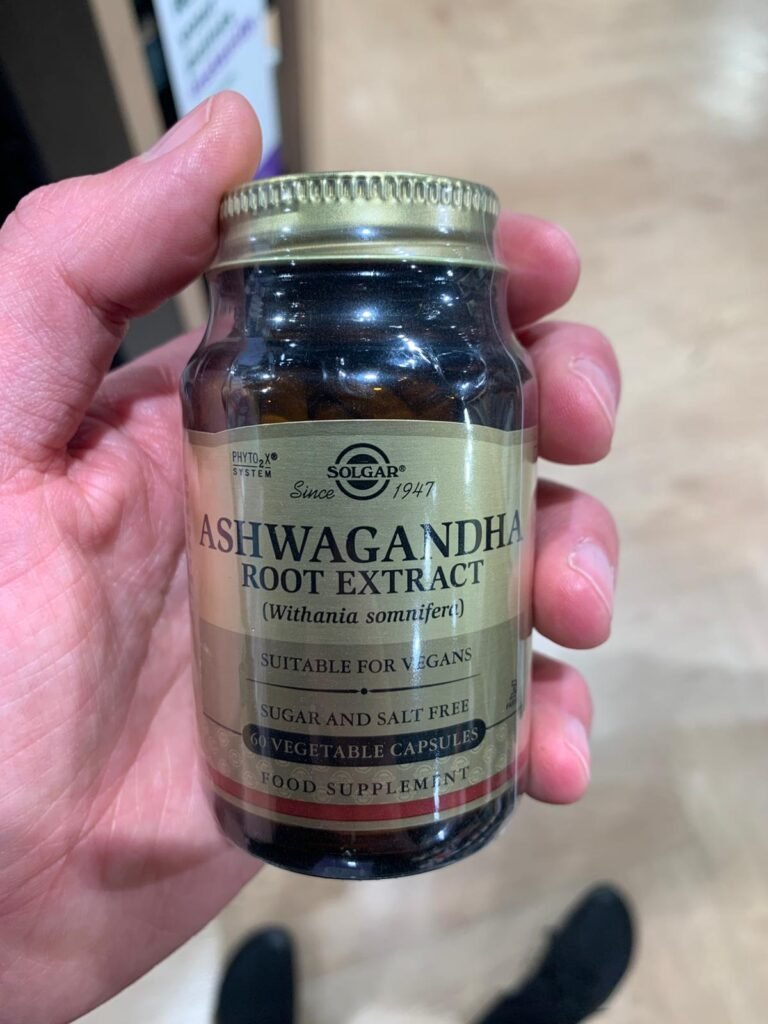
Ashwagandha has become one of the most popular supplements for people looking for better sleep, lower stress, and a calmer mind. The problem is that the online conversation around it is often more confident than the science itself. Ashwagandha may help in some situations, especially around stress and sleep, but it is not a magic fix, and it is not supported equally for every claim you see online.
What is ashwagandha?
Ashwagandha, also known as Withania somnifera, is an evergreen shrub used for centuries in traditional Ayurvedic medicine. It is commonly promoted as an adaptogen, meaning a plant believed to help the body cope with stress. Its main bioactive compounds include withanolides, along with other plant compounds that may also contribute to its effects. Commercial supplements usually contain extracts from the root, though some use both root and leaf.
In simple terms, ashwagandha is not a vitamin or mineral. It is a botanical supplement, and like many herbal products, its effects depend on the type of extract, the dose, the length of use, and the person taking it. That is one reason why results can vary so much from one person to another.
Why do people take ashwagandha?
Most people take ashwagandha because they want help with stress, anxiety, sleep, energy, or general wellbeing. Authoritative sources note that it is often promoted for stress and anxiety, sleep, male infertility, and athletic performance. However, not all of these uses are backed by the same level of evidence.
That is where confusion starts. A supplement can be popular for many reasons, but popularity is not the same thing as strong clinical proof. With ashwagandha, the best-supported uses are narrower than the internet often suggests.
Common myths about ashwagandha
Myth 1: Ashwagandha will fix your stress on its own
Ashwagandha may help reduce perceived stress, and some studies suggest it can lower stress-related measures such as cortisol. But that does not mean it can solve chronic stress by itself. If poor sleep, overwork, poor routines, high caffeine intake, or mental health issues are driving the problem, a supplement alone is unlikely to be enough. The science supports possible benefit, not a complete solution.
Myth 2: Ashwagandha is proven to cure anxiety
This is one of the biggest exaggerations online. The NIH Office of Dietary Supplements reports that research suggests ashwagandha extracts may lower stress, anxiety, and cortisol levels, but the recommendation is still provisional because stronger data are needed. NCCIH is even more cautious and says the evidence is unclear about its effects on anxiety. That means it may help some people, but it should not be framed as a proven treatment for anxiety disorders.
Myth 3: Ashwagandha will definitely improve your sleep
Sleep is another area where expectations often run ahead of the evidence. Some research suggests that certain ashwagandha preparations may improve sleep, and authoritative sources say it may be effective for insomnia and stress in some cases. But the effect is not universal, and it is not the same as saying it works reliably for everyone with poor sleep.
Myth 4: Ashwagandha is a natural testosterone booster for everyone
There is some limited evidence suggesting that taking ashwagandha for 2 to 4 months may increase testosterone levels and sperm quality in some men. But “limited evidence” is very different from a guaranteed hormone boost. It is not accurate to market it as a universal solution for low testosterone, libido, or male performance.
Myth 5: Because it is natural, it must be harmless
This is false. NCCIH notes that ashwagandha may be safe in the short term, up to about 3 months, but there is not enough information about long-term safety. It can cause drowsiness, stomach upset, diarrhea, and vomiting in some people, and there have been rare cases linking ashwagandha supplements to liver injury. It is also not recommended during pregnancy, while breastfeeding, before surgery, or for people with autoimmune or thyroid disorders.
What are the real benefits of ashwagandha?
The most realistic and evidence-based benefit of ashwagandha is support for stress-related symptoms. Research summarized by the NIH suggests that some ashwagandha extracts may lower stress, anxiety, and cortisol levels, particularly over short-term use. This is the clearest reason people consider it.
A second real benefit is possible improvement in sleep, especially in people dealing with insomnia or stress-related sleep difficulties. This does not mean it is a guaranteed sleep solution, but it does mean there is enough evidence to take the possibility seriously.
There is also limited evidence for male reproductive support, particularly around testosterone levels and sperm quality, when used for a few months. This is a promising area, but still not something that should be overstated.
Some other areas, such as athletic performance, cognitive function, diabetes, menopause, and female infertility, are still too uncertain. NCCIH states that there is not enough evidence to determine whether ashwagandha is helpful for these conditions. So while the marketing may be broad, the science remains much narrower.
What should you realistically expect?
If ashwagandha helps you, the result is more likely to feel like subtle support than a dramatic transformation. You might notice that you feel a bit calmer, that your sleep improves slightly, or that you feel less overwhelmed during stressful periods. You might also notice nothing at all. Herbal supplements often work like that: some people respond, some do not, and the quality of the product matters.
What you should not expect is a supplement that completely fixes anxiety, erases insomnia, transforms your hormones, or makes stress disappear while the rest of your lifestyle stays the same. Ashwagandha may support the process, but it is not a replacement for sleep habits, nutrition, exercise, recovery, therapy, or medical care where needed.
A quick safety note
This is one of the most important parts of the conversation. Ashwagandha can interact with medications, including those for diabetes, high blood pressure, seizures, sedation, immune suppression, and thyroid hormone. It should also be used cautiously because of rare but documented liver injury cases. That does not mean it is unsafe for everyone, but it does mean it should not be treated casually.
Frequently Asked Questions
What is ashwagandha?
Ashwagandha is an herbal supplement made from Withania somnifera, a plant used in traditional Ayurvedic medicine. It is commonly promoted for stress, sleep, and general wellbeing.
What is ashwagandha mainly used for?
It is most commonly used for stress support, and some evidence suggests certain ashwagandha extracts may also help with sleep. Those are the uses with the strongest current support.
Does ashwagandha really help with anxiety?
It may help reduce perceived stress and some anxiety-related symptoms in certain people, but the evidence is still not strong enough to treat it as a proven anxiety treatment.
Can ashwagandha improve sleep?
Some research suggests certain ashwagandha preparations may help with insomnia and stress-related sleep problems, but it is not guaranteed to work for everyone.
Does ashwagandha increase testosterone?
There is some limited evidence suggesting that taking ashwagandha for 2 to 4 months may increase testosterone levels and sperm quality in some men, but this should not be treated as a universal benefit.
Is ashwagandha safe?
Ashwagandha may be safe for short-term use, generally up to about 3 months, but there is not enough information about long-term safety. Possible side effects include drowsiness, stomach upset, diarrhea, and vomiting.
Can ashwagandha affect the liver?
Yes, although it appears to be rare, there have been reported cases linking ashwagandha supplements to liver injury.
Who should avoid ashwagandha?
It should be avoided during pregnancy and breastfeeding, and it is not recommended for people with autoimmune disorders, thyroid disorders, or those about to have surgery.
Can ashwagandha interact with medications?
Yes. It may interact with medicines for diabetes, blood pressure, thyroid hormone, seizures, sedation, and medications that suppress the immune system.
What should I realistically expect from ashwagandha?
If it helps, the effect is more likely to be subtle support for stress or sleep rather than a dramatic transformation. It should be seen as a support tool, not a magic fix.
Final takeaway
Ashwagandha is not nonsense, but it is not magic either. The strongest reasons to consider it are stress-related symptoms and, in some cases, sleep support. There may also be limited benefit for testosterone and sperm quality in certain men. Beyond that, many of the biggest online promises are still ahead of the evidence.
The smartest way to think about ashwagandha is as a possible support tool, not as a cure-all. If you use it, use it with realistic expectations, good product quality, and awareness of its limitations and safety considerations.