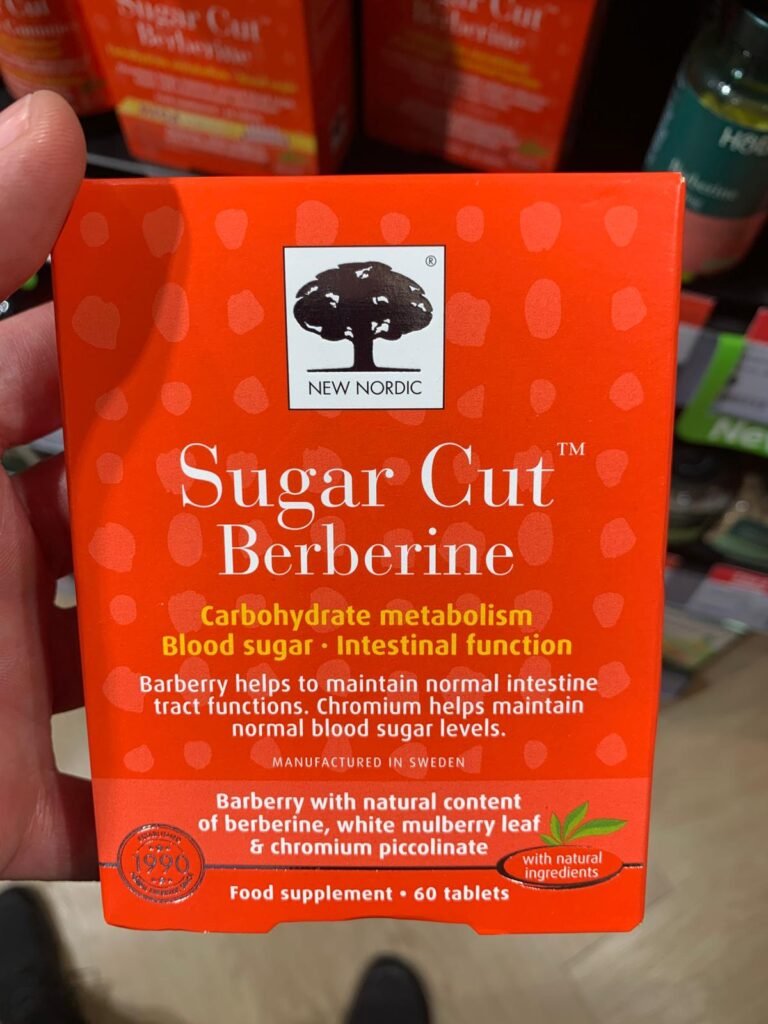
Sugar Cut Berberine is the kind of supplement that attracts attention very quickly because it sits right at the intersection of blood sugar, cravings, metabolism, and weight loss. In Ireland, branded products such as New Nordic Sugar Cut Berberine are sold with language around maintaining normal blood sugar levels and sugar metabolism, and are even positioned for use before lunch, dinner, breakfast, or a sugar rich snack. That tells you a lot about what consumers expect from it before they ever read the science.
The problem is that public expectation is usually much bigger than the evidence. Berberine is a real bioactive compound with promising data in metabolic health, but it is not a magic fix, not a replacement for lifestyle change, and not the same thing as prescription medication.
What is Sugar Cut Berberine?
If by Sugar Cut Berberine you mean the branded supplement sold in Ireland, it is typically a formula built around barberry and white mulberry extracts, plus chromium picolinate. Boots Ireland describes it as a premium barberry and white mulberry extract tablet formulated with chromium picolinate, with chromium claims around maintaining normal blood glucose levels and normal sugar metabolism.
From a scientific perspective, the core ingredient people are really interested in is berberine. Berberine is an isoquinoline alkaloid found in plants such as barberry, goldenseal, and Oregon grape. It has a long history of use in traditional medicine for infections, digestive conditions, and inflammatory disorders, and in supplement form it is mainly marketed today for blood sugar, cholesterol, and triglyceride support.
So the first important distinction is this: Sugar Cut Berberine is not a medicine. It is a supplement product, and the evidence base applies mostly to berberine itself, not to every branded formula equally.
Why are people in Ireland interested in it?
The Irish retail and media language around berberine is very revealing. Consumer facing pages and coverage commonly frame it around:
- blood sugar support
- sugar metabolism
- cravings
- metabolism
- weight loss
- “nature’s Ozempic”
- “food noise”
Boots and Holland & Barrett Ireland position Sugar Cut Berberine around blood sugar support, while Irish media coverage has highlighted berberine as something people associate with reducing sugar cravings and helping with modest weight loss.
That matters because it tells you how the public thinks about it. Most people are not looking for an alkaloid with metabolic effects. They are looking for something that might:
- help control cravings
- make weight loss easier
- support blood sugar
- calm down “food noise”
- act as a natural alternative to weight loss injections
That is exactly why the myths around berberine spread so easily.
How does berberine work in the body?
Berberine appears to influence metabolic health through multiple pathways. Preclinical and mechanistic research suggests it may affect hepatic LDL receptor expression, reduce PCSK9 activity, improve endothelial function, and influence AMPK related pathways. It has also been studied for effects on glucose handling, insulin sensitivity, and lipid metabolism.
In simpler terms, berberine is being studied because it may help the body handle glucose and lipids more effectively. That is the main reason it keeps coming up in conversations about insulin resistance, cholesterol, triglycerides, and weight management. But “being studied” is not the same thing as “proven to transform results in everyone.”
Myth 1: Sugar Cut Berberine is basically natural Ozempic
This is the most popular myth, and it is also the most misleading one.
NCCIH says berberine has become popular as a potential weight loss aid, but there have not been many clinical trials in people, so there is not enough rigorous scientific evidence to determine whether it is effective for weight loss. Their weight loss page adds that some studies suggest it might help, but the evidence is not conclusive.
So while the internet may call berberine “nature’s Ozempic,” that is a marketing label, not a scientific conclusion. Berberine is not a GLP-1 medication, and it should not be framed as if it can replicate the effect of drugs like semaglutide.
Myth 2: It will automatically stop sugar cravings
This is partly why branded products like Sugar Cut Berberine sound so appealing. The name itself suggests a direct effect on sugar cravings and sugar control. In Irish media, berberine is often discussed in connection with reduced cravings for high carbohydrate and sugary foods, sometimes even described as helping with “food noise.” But even that coverage presents the effect as promising rather than guaranteed.
What the science supports more clearly is that berberine may have a modest effect on blood glucose in people with type 2 diabetes and may improve insulin sensitivity. That is different from saying it will reliably switch off cravings on its own. Cravings are influenced by sleep, food quality, protein intake, stress, routine, medications, and behavior patterns, not just one supplement.
Myth 3: It is a substitute for diabetes treatment
This is another dangerous oversimplification.
Memorial Sloan Kettering notes that a few studies and meta analyses suggest berberine may be helpful for diabetes, but the studies are of limited quality and more research is needed. NCCIH says there is some evidence that berberine may modestly lower blood glucose in people with type 2 diabetes. That is encouraging, but it does not make berberine a replacement for diabetes medication or medical supervision.
If someone already uses diabetes medication, this is even more important because berberine may interact with sulfonylureas and could change blood sugar handling in ways that need professional oversight.
Myth 4: It is mainly a fat burner
Berberine is often pulled into weight loss conversations because of its metabolic angle, but the strongest evidence is still more about blood sugar and lipid markers than about dramatic fat loss. NCCIH’s weight loss page notes that some studies found decreases in weight and BMI, particularly at doses above 1 gram per day and for more than 8 weeks, but again the evidence is not conclusive.
That means the most honest framing is this: berberine may support weight management indirectly in some people, especially where insulin resistance, appetite patterns, or cardiometabolic risk factors are part of the picture. It is not best understood as a classic fat burner.
Myth 5: Because it is a supplement, it must be harmless
Not true.
Berberine is generally described as well tolerated when taken orally, but the most common side effects include abdominal pain, constipation, diarrhea, nausea, vomiting, bloating, appetite loss, and upset stomach. Both NCCIH and MSKCC highlight these gastrointestinal effects as the main safety issue most people are likely to notice.
It also has important interaction warnings. MSKCC advises against use with certain chemotherapy drugs, immunosuppressants such as tacrolimus and cyclosporin, sulfonylureas, and drugs that are CYP2D6, CYP2C9, or CYP3A4 substrates. It also should not be used in pregnancy or breastfeeding, and NCCIH notes it should not be given to infants because it may worsen jaundice and contribute to kernicterus.
What are the real benefits of berberine?
The most evidence based benefits of berberine are in metabolic health, especially around:
- blood glucose
- cholesterol
- triglycerides
- some cardiovascular risk markers
NCCIH states there is some evidence that berberine may have a modest effect on lowering blood glucose in people with type 2 diabetes and may reduce cholesterol levels. MSKCC similarly says limited human evidence suggests berberine may lower cholesterol, triglycerides, and blood sugar levels.
MSKCC also notes that several studies and meta analyses suggest benefit for high cholesterol, although the effect may be small and better quality studies are still needed. An international expert panel concluded that berberine may be helpful in mild hypercholesterolemia, especially in people who do not tolerate statins well or who have metabolic syndrome.
There is also some evidence that berberine may help with weight and BMI, but this is more modest and less certain than social media makes it sound. NCCIH says weight effects were seen mainly in studies using more than 1 gram per day for more than 8 weeks. That is not the same as a quick or dramatic fat loss supplement.
What should you realistically expect?
If berberine helps, the most realistic expectation is gradual metabolic support, not a dramatic transformation.
You might reasonably expect:
- modest support for blood glucose markers
- modest support for cholesterol or triglycerides
- possible indirect help with appetite patterns in some contexts
- small changes in weight over time, not rapid or dramatic loss
That is the evidence-based zone.
What you should not expect is:
- instant appetite shutdown
- major fat loss without changing your diet
- a replacement for diabetes medication
- a replacement for sleep, movement, protein intake, or calorie control
- a supplement that fixes cravings while everything else in your lifestyle stays the same
Even MSKCC is very clear that berberine is not a substitute for lifestyle changes.
A practical note on Sugar Cut Berberine specifically
For Irish consumers, one extra point matters. Boots Ireland’s product directions position Sugar Cut Berberine around pre meal use, including before lunch, dinner, breakfast, or even a sugary snack. That kind of positioning reinforces the public idea that this is a cravings or blood sugar management tool to “use around food.”
That does not automatically make the product ineffective, but it does shape expectations in a very specific way. People begin to think in terms of “take this before food and it will control the damage.” That is exactly the kind of mindset that often leads to overestimating what supplements can do.
Frequently Asked Questions
What is Sugar Cut Berberine?
It is a branded supplement sold in Ireland that typically combines barberry and white mulberry extracts with chromium picolinate. The core ingredient people are usually interested in is berberine.
Is Sugar Cut Berberine a medicine?
No. It is a supplement, not a medicine. The scientific evidence mainly relates to berberine as a compound, not to every branded formula equally.
What is berberine mainly used for?
It is mainly marketed to support blood sugar, cholesterol, and triglyceride levels, and it is also being studied for metabolic syndrome and weight management.
Does berberine help with weight loss?
Maybe a little, in some people, but the evidence is not conclusive. Some studies found reductions in weight and BMI, especially at higher doses over more than 8 weeks.
Is berberine really “nature’s Ozempic”?
No. That is a social media label, not a scientific conclusion. Berberine is not the same as a GLP-1 medication and should not be treated as an equivalent.
Can berberine lower blood sugar?
There is some evidence that it may modestly lower blood glucose in people with type 2 diabetes, but it should not replace proper medical care or prescribed treatment.
Can berberine reduce cholesterol?
There is limited human evidence and several meta analyses suggesting it may help lower cholesterol and triglycerides, though the effect may be modest.
What side effects should I know about?
The most common side effects are gastrointestinal, including abdominal pain, bloating, constipation, diarrhea, nausea, vomiting, upset stomach, and appetite loss.
Who should avoid berberine?
People who are pregnant or breastfeeding should avoid it. Extra caution is also needed for infants, and for people taking certain diabetes drugs, immunosuppressants, chemotherapy drugs, or medications metabolized through CYP2D6, CYP2C9, or CYP3A4 pathways.
What should I realistically expect from Sugar Cut Berberine?
At best, think in terms of modest support for blood sugar and lipid markers, not dramatic weight loss or automatic control over cravings. It works, if it works for you, as part of a broader lifestyle strategy.
Final takeaway
Sugar Cut Berberine is best understood as a berberine based metabolic support supplement, not as a miracle weight loss product. The real evidence points most clearly toward modest benefits for blood sugar, cholesterol, and triglycerides, with some possible support for weight over time in certain contexts. The big myths around it are that it works like Ozempic, kills cravings on demand, or replaces lifestyle and medical care. None of those claims are well supported.
The smartest way to think about berberine is as a possible support tool for metabolic health, especially if used alongside food quality, protein intake, fibre, sleep, stress management, and medical supervision where appropriate. That is much less exciting than a viral promise, but it is much closer to the truth.